My Luxury Boutique, the store of the future imagined by Adone Conseil
What if AI revolutionized the in-store client experience?
Imagine a world where every street corner is animated by drones delivering packages to your door, where flying cars hover over city centers, and where robots assist customers with their choices. In 2025, these science-fiction fantasies seem more likely than ever. But what about our retail spaces? What could the store of the future look like? By building on existing technologies such as connected glasses, interactive mirrors and immersive sensory experiences, we can envision a captivating future where shopping is no longer a mere chore but a rewarding, personalized adventure.
In this article you will discover:
- AI-related technologies currently used in Luxury Boutiques.
- “My Luxury Boutique”, the store of the future imagined by Adone Conseil.
- The different concepts tailored to “My Luxury Boutique”
Ready to discover this fascinating evolution?
The Luxury sector is undergoing profound transformation. For a long time, AI was kept at a distance by Luxury Houses, as it was seen as too technical, too cold, or even incompatible with emotions. Gradually, however, AI has made its way into boutiques.
First, to optimize inventory management and reduce stockouts; then, to transform the client experience through personalization and real‑time sales analysis. According to the State of AI in Retail & CPG 2024 (NVIDIA report), 53% of large retailers (with revenues above $500M) already use AI for internal purposes such as in-store flow analysis (heatmapping, queues, etc.).
In the Luxury sector, 60% of Luxury Houses use predictive algorithms to refine their sales forecasts, enabling precise inventory management and anticipating unsold stock.
While the in-store experience remains a pillar of brand identity, client expectations have deeply evolved:
- Instant personalization.
- Seamless omnichannel experiences.
- Sensory immersion.
- Strong emotions.
Digital is no longer just a tool for efficiency, it becomes a lever for enchantment and differentiation.
It is therefore essential to analyze how the smart integration of digital technologies and artificial intelligence into points of sale is redefining the standards of the high‑end client experience, and how Luxury Houses can seize these opportunities.
Rather than a sudden break, the physical store of the future represents a natural shift toward a technology‑enhanced space. Beyond a simple digitized showroom, it evolves into an intelligent ecosystem able to engage with every visitor, foresee their needs and deliver memorable experiences.
AI-related technologies currently used in Luxury Boutiques
We can explore several concrete cases of innovations already existing in some Luxury stores and driven by artificial intelligence:
Smart cameras:
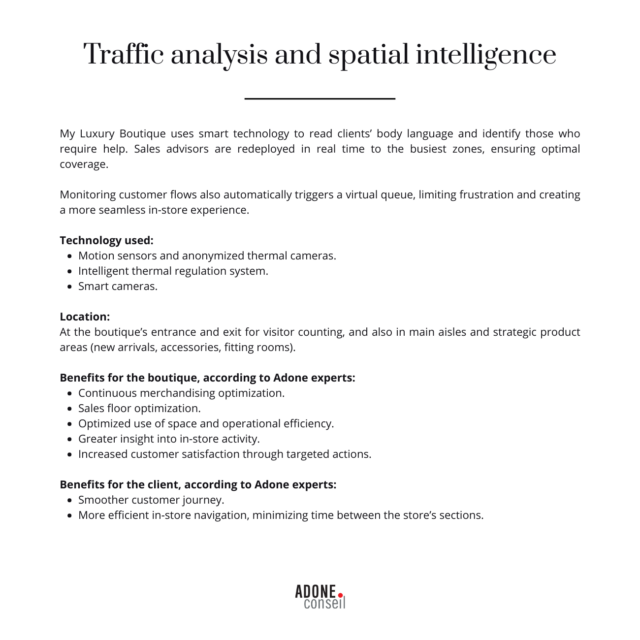
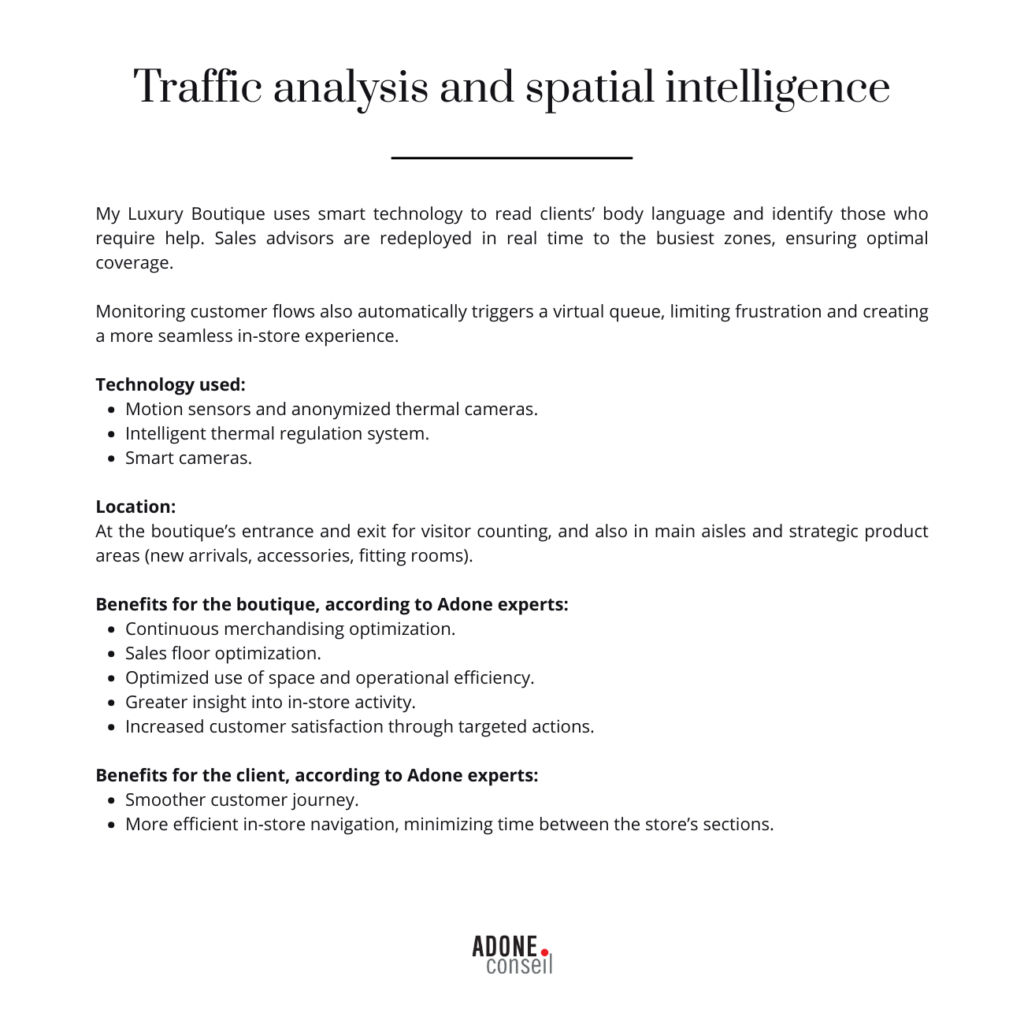
- Trained algorithms monitor precise customer gestures in real time via security detectors and RFID technology, to identify potential theft behaviors. These behaviors are identified through gesture analysis, such as repetitive movements, concealment of items, or unusual handling, without relying on facial recognition or interpretation of facial expressions, which can sometimes be hard to determine. Beyond security, these systems are also employed for traffic analysis, which enables measurement of in‑store flows and customer journeys. Several Luxury Houses have already adopted this solution to optimize opening hours, merchandising and staffing.
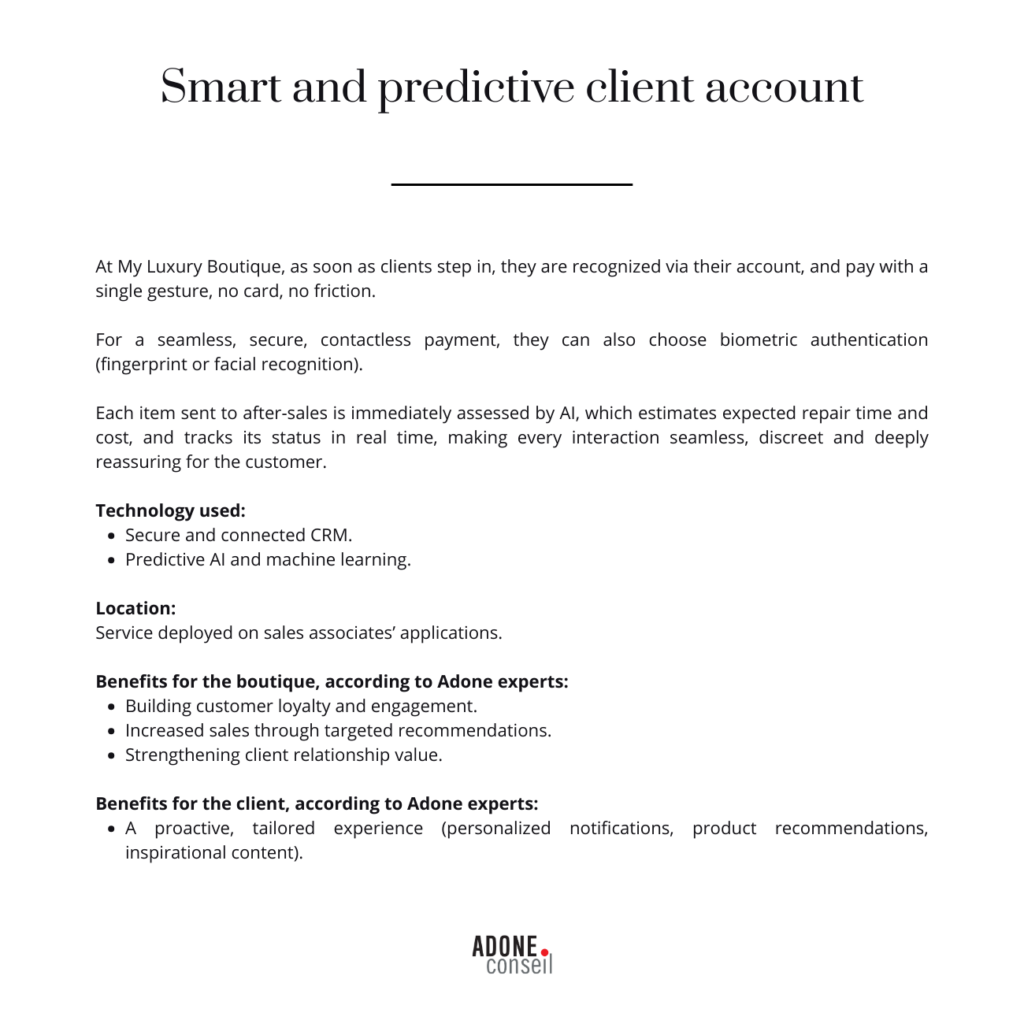
From a hospitality and client relations standpoint, AI can also detect regular and VIP clients through non‑biometric indicators like loyalty cards, connected devices or CRM data. This enables a personalized welcome and a bespoke in‑store experience upon arrival. It is crucial to ensure GDPR compliance when implementing these solutions.
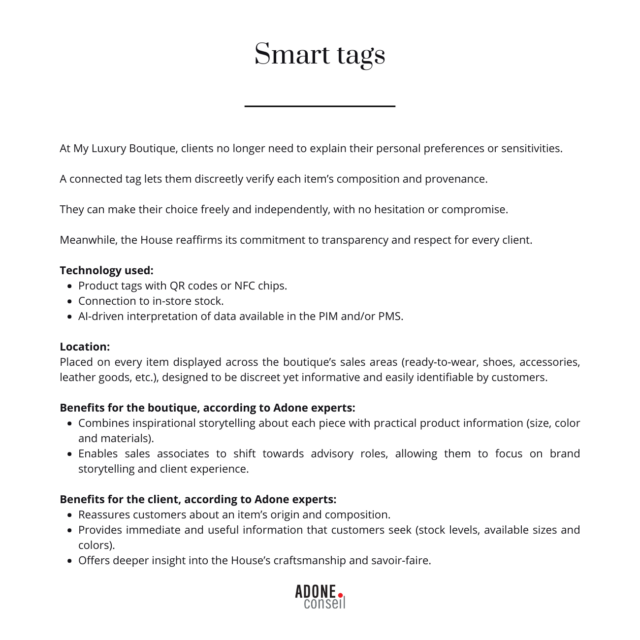
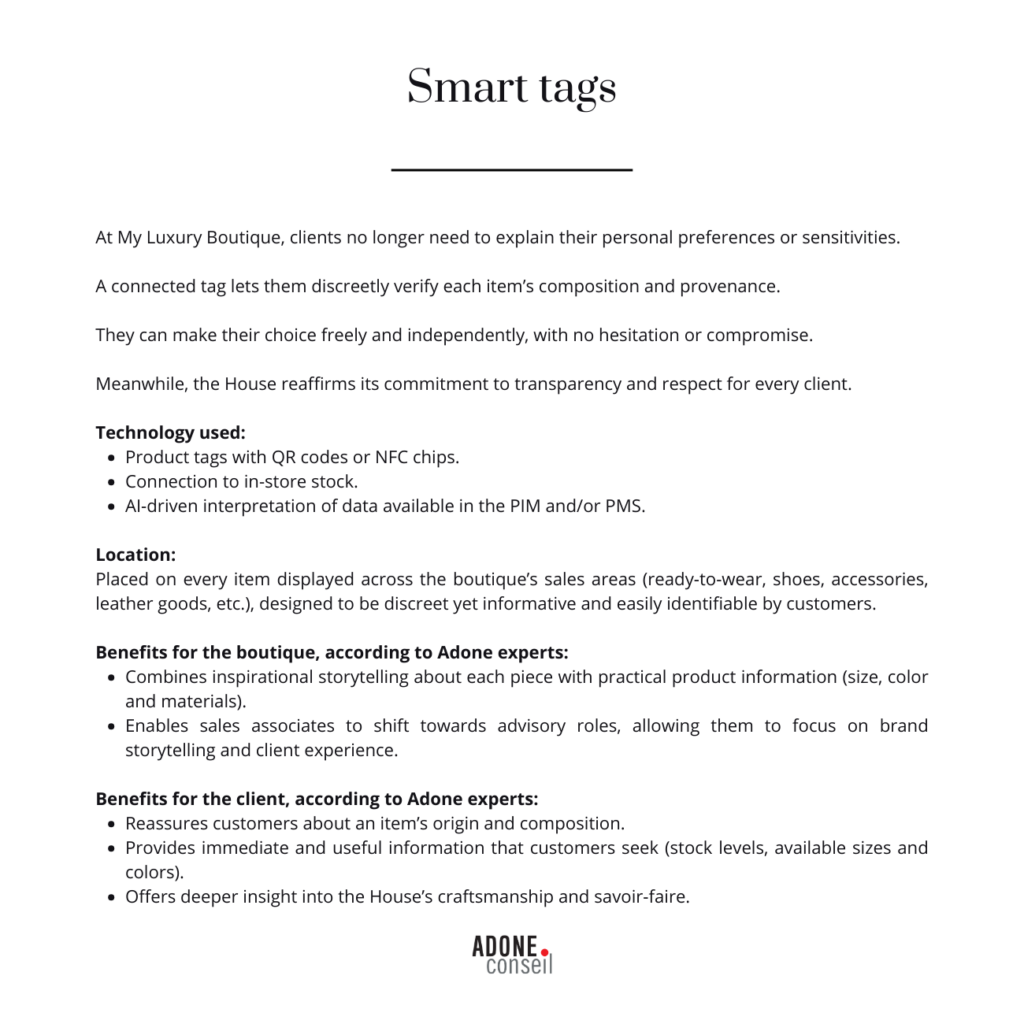
Smart electronic tags:
- Smart electronic tags that combine RFID and AI are revolutionizing item management in Luxury boutiques. They give sales advisors the ability to quickly locate products, optimize shelf organization, and facilitate order preparation. Serving as digital passports for every piece, these tags grant clients access to in‑depth details about composition, ESG commitments and bespoke care advice through a single QR code. In the Luxury sector, they elevate the shopping experience by blending innovation, transparency and refinement.
Virtual Try-On:
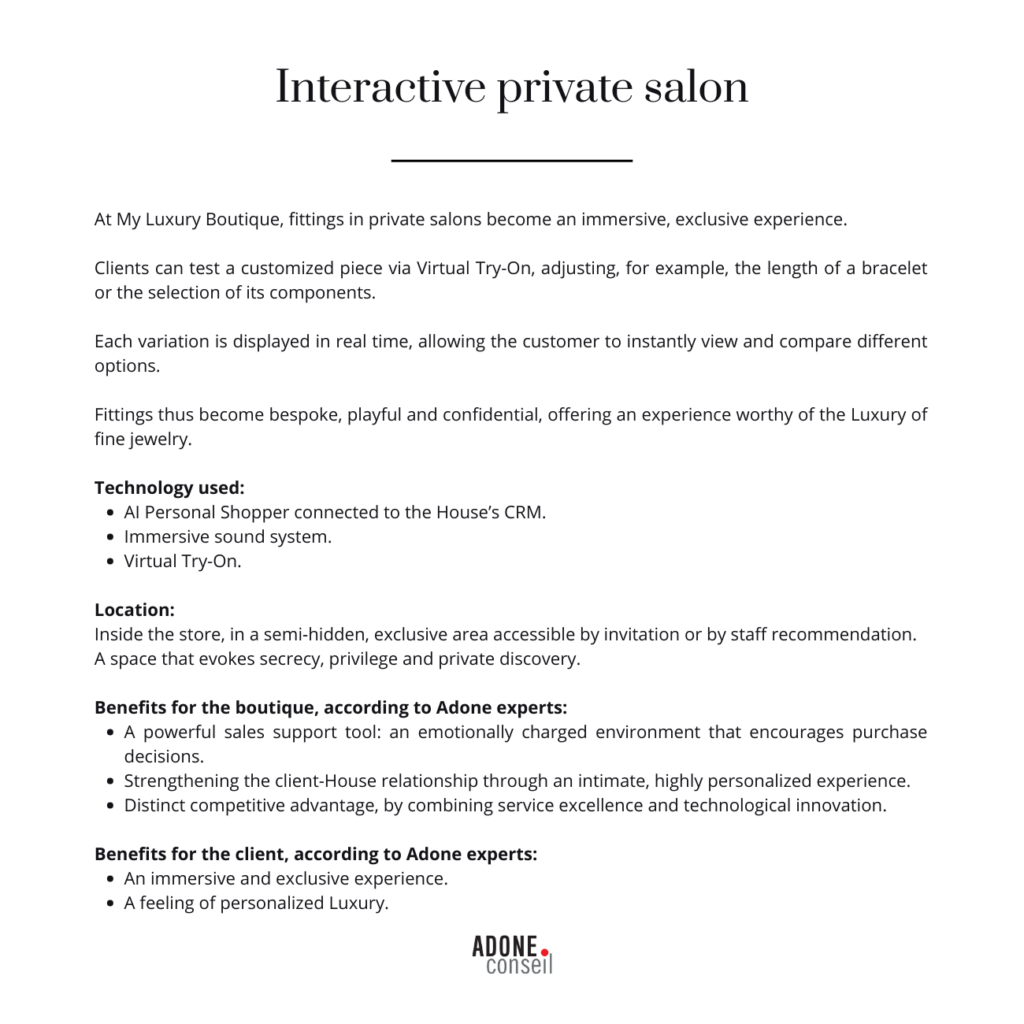
- This technology, based on augmented reality and artificial intelligence, allows customers to virtually try products by overlaying the chosen item onto the customer’s image in real time. So far, Virtual Try‑On has been used for makeup trials at L’Oréal and for shoes at Louboutin. This technological advance enabled Estée Lauder to reach a 250% conversion rate after lipstick try‑ons, according to PerfectCorp. In addition to product try‑ons, there are skin diagnosis tools that rely on thousands of photos and algorithms, validated by dermatologists, to evaluate skin elements such as wrinkles and skin firmness.
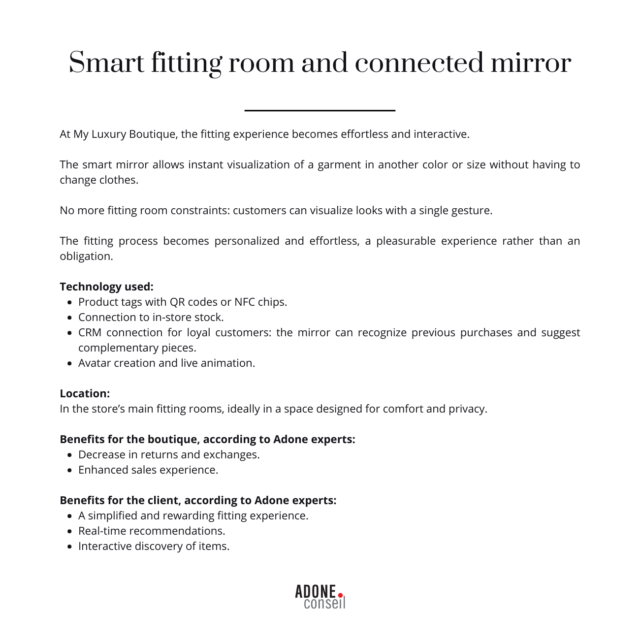
Smart mirrors:
- In Luxury boutiques, smart mirrors reinvent the fitting experience. Thanks to AI, clients can virtually view different pieces on a personalized avatar without having to change clothes. By scanning a ready‑to‑wear item, they gain access to the House’s atelier resources: sketches, materials and artisanal know‑how. The mirror then displays an inspirational moodboard created by generative AIs, offering suggestions on how to wear or accessorize the piece. Finally, AI enriches the session by delivering exclusive content tied to the fitting, blending fashion and emotions, and by integrating in‑fitting‑room payment features.
Immersive room:
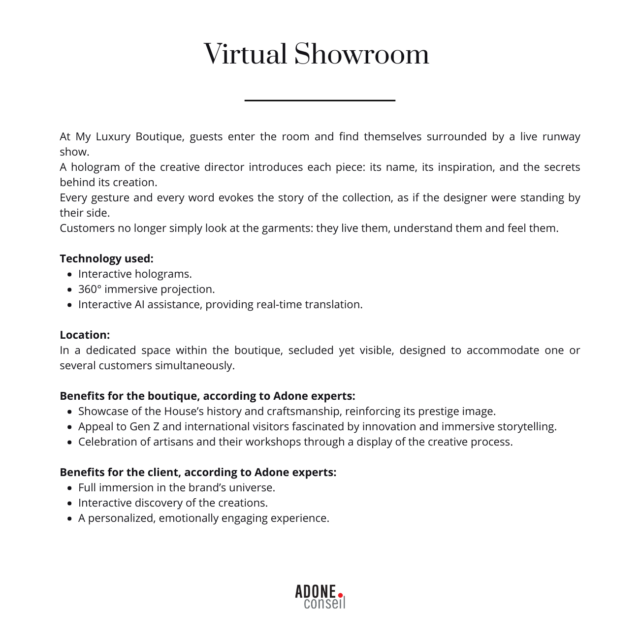
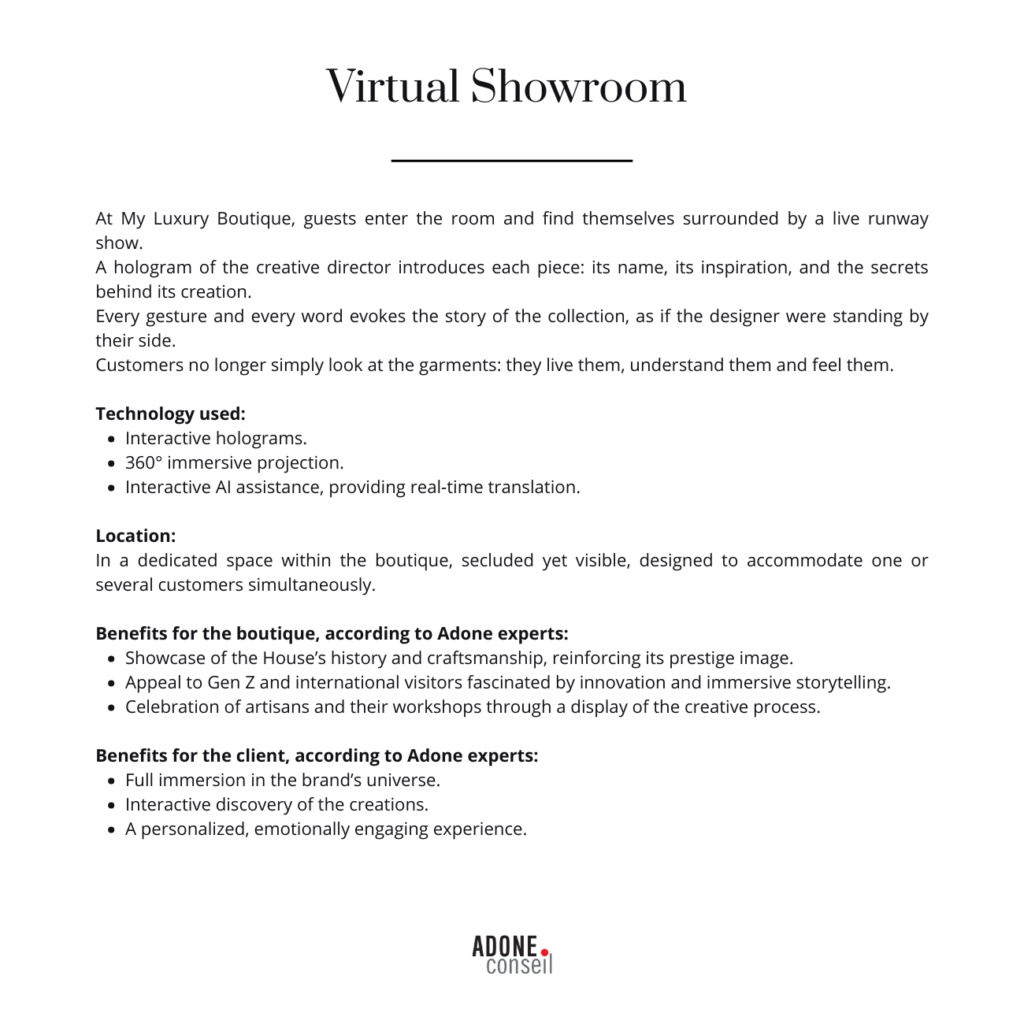
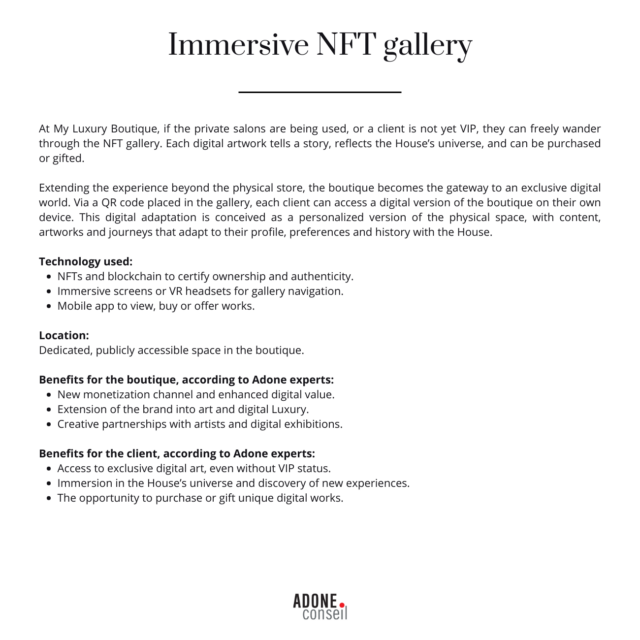
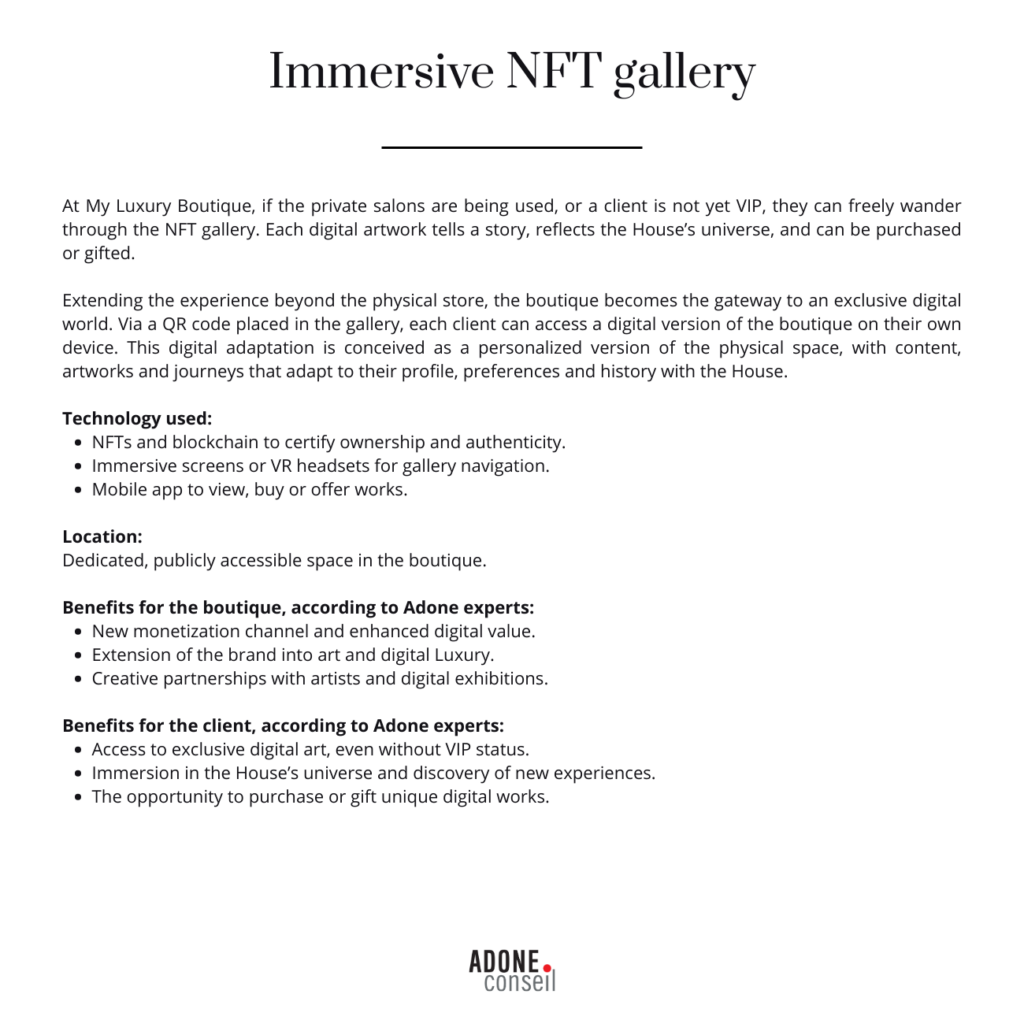
- In an immersive Luxury boutique room, AI enables real‑time translation of speeches or content, offering a seamless experience for international clients. It can orchestrate a personalized digital fashion show where each client sees pieces worn and adapted to their profile via augmented reality. LVMH, in collaboration with Epic Games, allowed its clients to relive one of its runway shows. The pieces are presented to customers through an enriched storytelling that conveys the House’s universe via a 3D projection. By enhancing sensory engagement and memorability, this technology turns the boutique visit into an event.
After‑sales service:
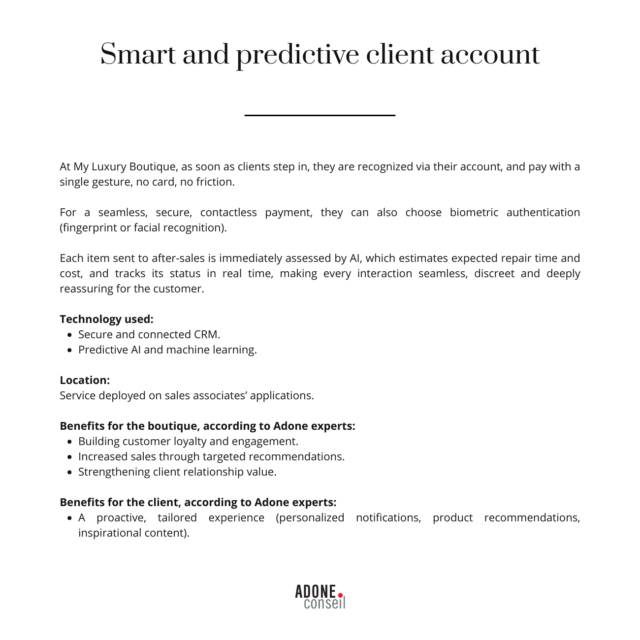
- In Luxury boutiques, intelligent after‑sales service becomes a natural extension of the customer experience. Thanks to predictive artificial intelligence, each piece is instantly recognized: its model, materials and history. The system can therefore anticipate repair or maintenance needs, ensuring the product’s longevity and flawlessness. Each item is linked to a digital certificate of ownership, guaranteeing authenticity, traceability and secure transfer on a blockchain. After‑sales service thus transforms into a ritual of care and trust, emblematic of contemporary Luxury.
It is essential to view these technologies not as mere gadgets but as tools that help meet a key requirement of contemporary Luxury: emotional hyper‑personalization.
In traditional retail, digital is used to gain efficiency (fast checkout, inventory management, CRM). In Luxury, it must go much further: it must amplify emotion and tell the House’s story. Integrating digital in-store is therefore not a mere addition of technologies. It requires a fine understanding of client expectations, coherence with brand identity, bespoke experience design and smooth orchestration between back office, AI and physical space.
It is precisely along this path that Adone Conseil supports Luxury players: from strategic vision to operational implementation, including the design of memorable and profitable experiences.
In the years to come, Luxury boutiques will no longer be just places to buy: they will become stages of augmented emotions. Rather than diminishing their essence, digital will act as their new ambassador.
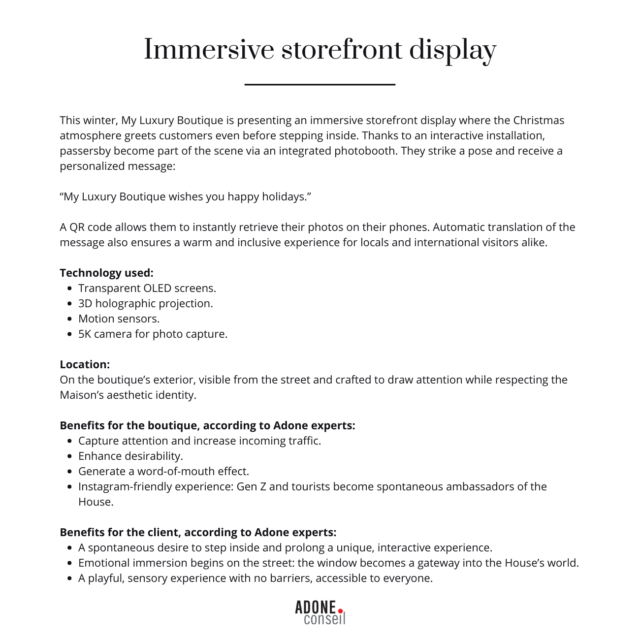
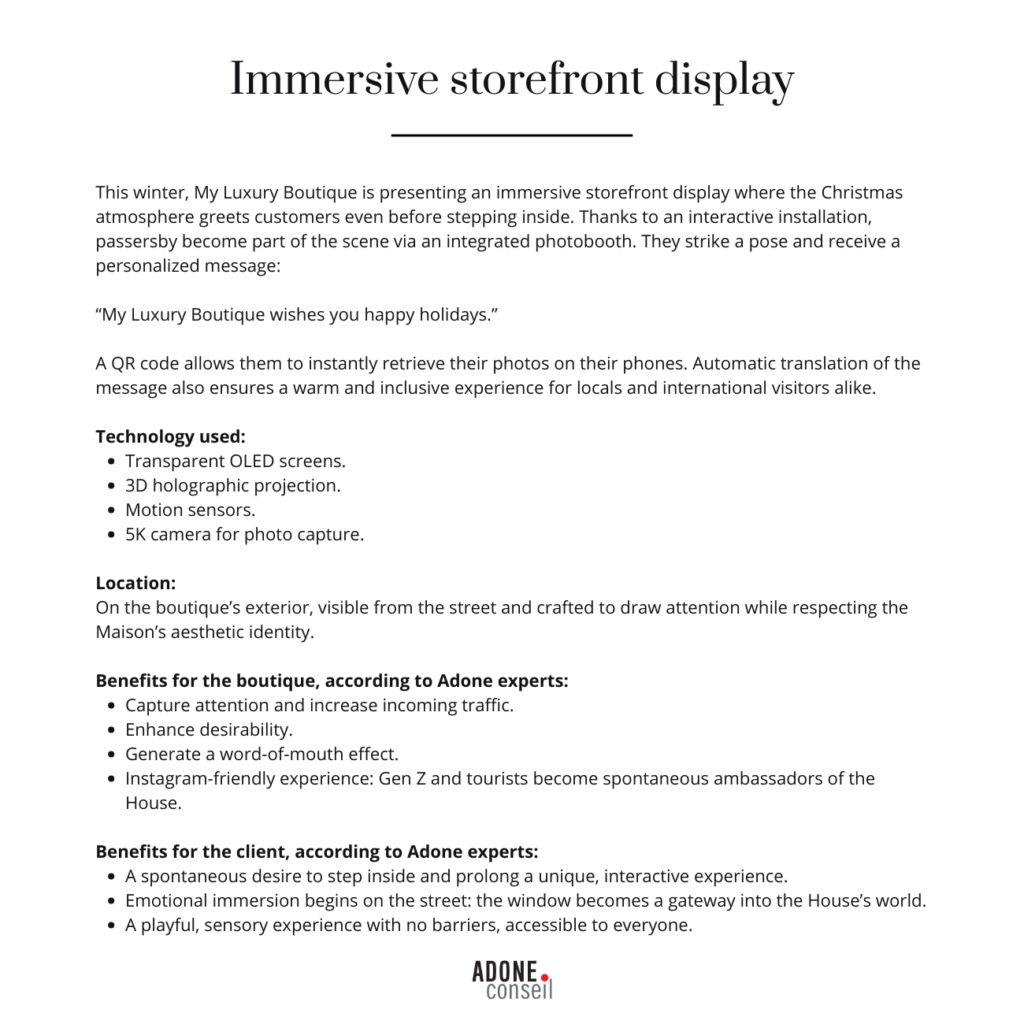
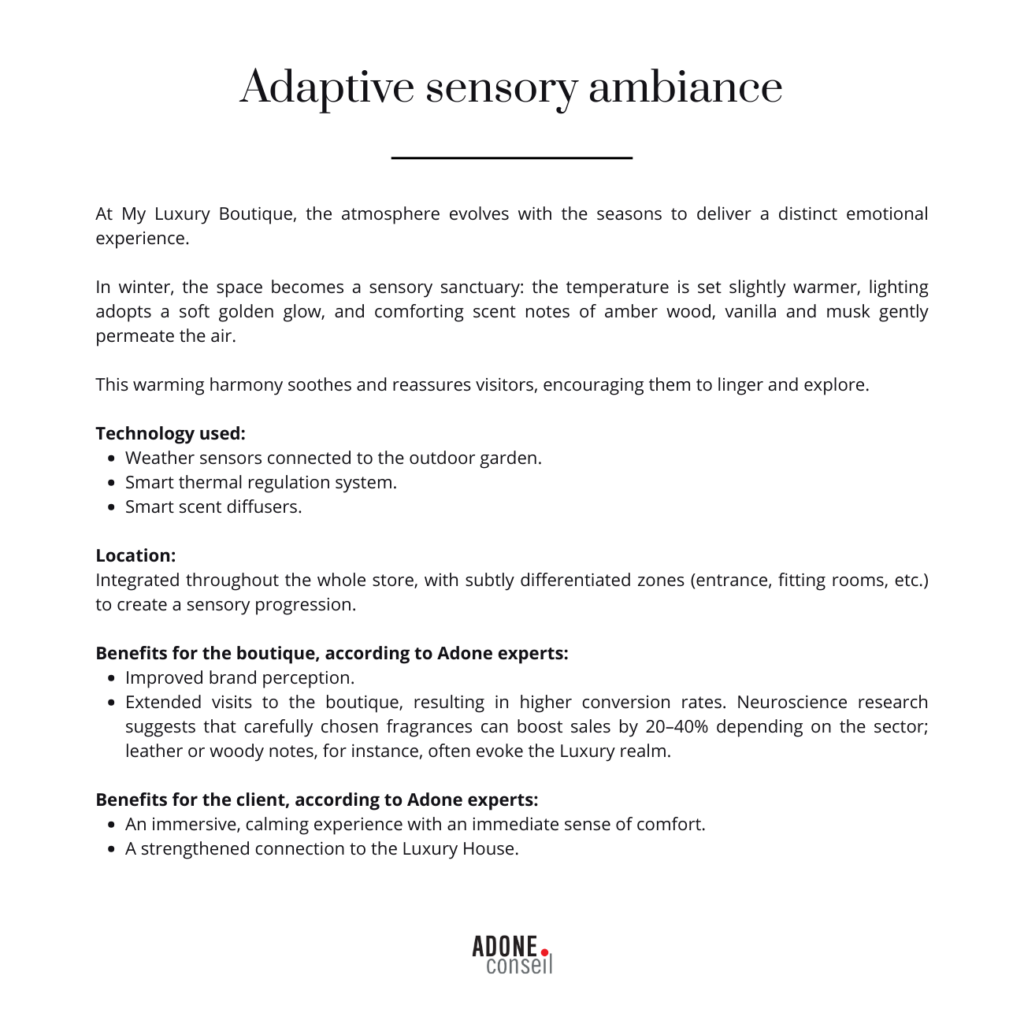
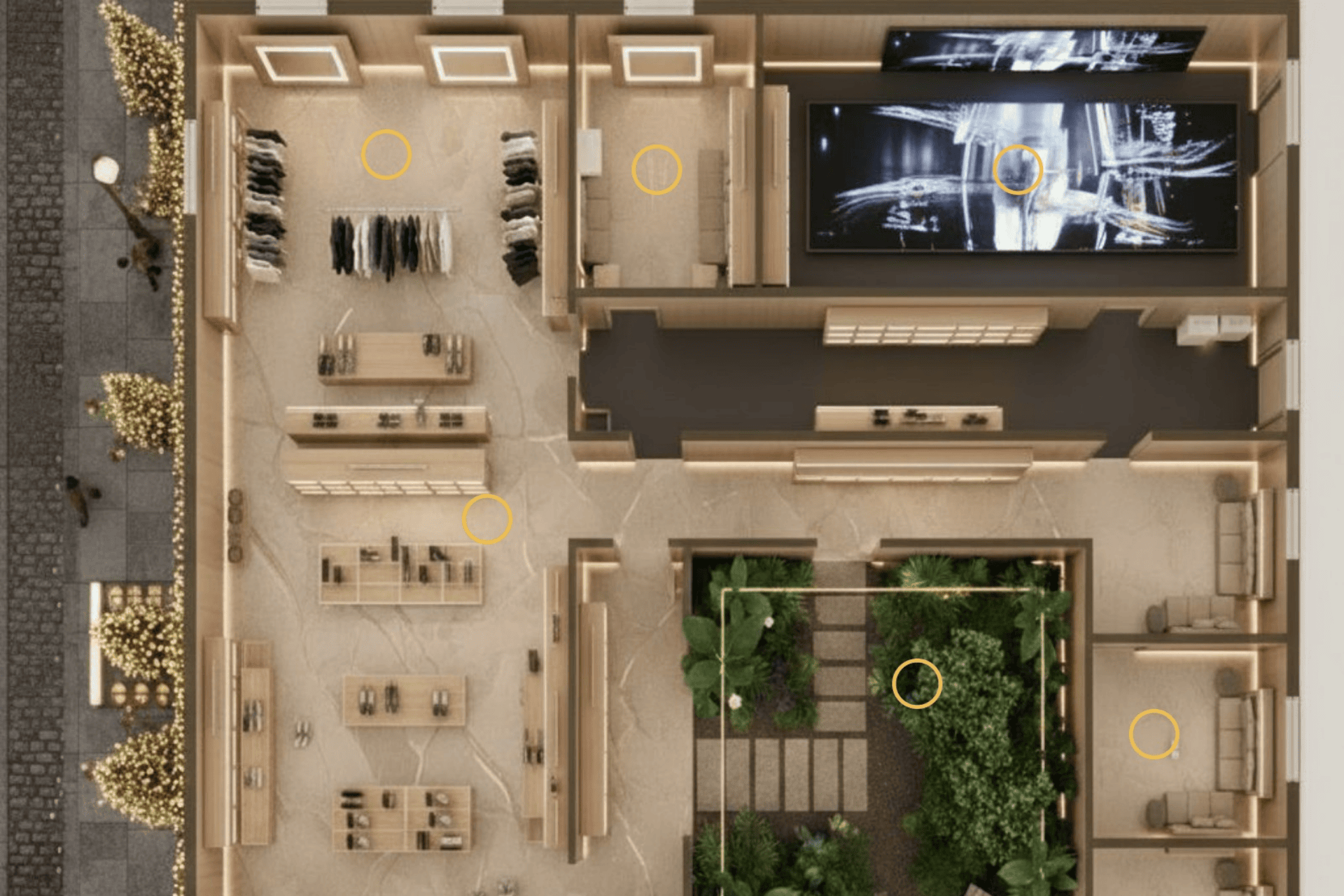
Dive into “My Luxury Boutique”, the store of the future envisioned by Adone Conseil
Our experts have envisioned the boutique of the future, exploring concrete innovations and the potential benefits of artificial intelligence, and explaining what these gains mean for clients and retailers.
All images on the plan were created using generative artificial intelligence.
Conclusion
In conclusion, while store visits to physical locations are declining, shifts in shopping behavior are paving the way for a complete redefinition of the in‑store experience. By making each visit more interactive, personalized, and memorable, digital innovations give clients a compelling reason to visit and return. They transform the boutique into a realm of discovery, engagement, and emotion, amplifying word-of-mouth and strengthening the client’s relationship with the brand.
The ultimate goal of these new experiences is not merely to attract clients, but to turn every visit to the boutique into a privileged moment, one that encourages both purchase and loyalty. With e-commerce on the rise, the store of the future can no longer be just a place of transaction, it must become a living, hybrid space where digital seamlessly enhances the physical. More than ever, the future of retail lies in the ability to harmoniously blend online and in-store experiences.